


 What you choose for your roof’s ventilation system will have far-reaching consequences. How your roof releases hot air impacts its durability, longevity, and the curb appeal of your home. For homes in Florida, ridge vents are the most popular option. But they aren’t right for every home — so how do you know if they’re right for yours?
That’s what we’re here to help you figure out. PITCH Roofing is a local roofing company founded and operated by experienced Florida roofing contractors. Today, we’re telling you everything you need to know about getting ridge vents in Florida. To start, let’s clarify exactly what a ridge vent is and what makes it so uniquely appealing.
What Is a Ridge Vent?
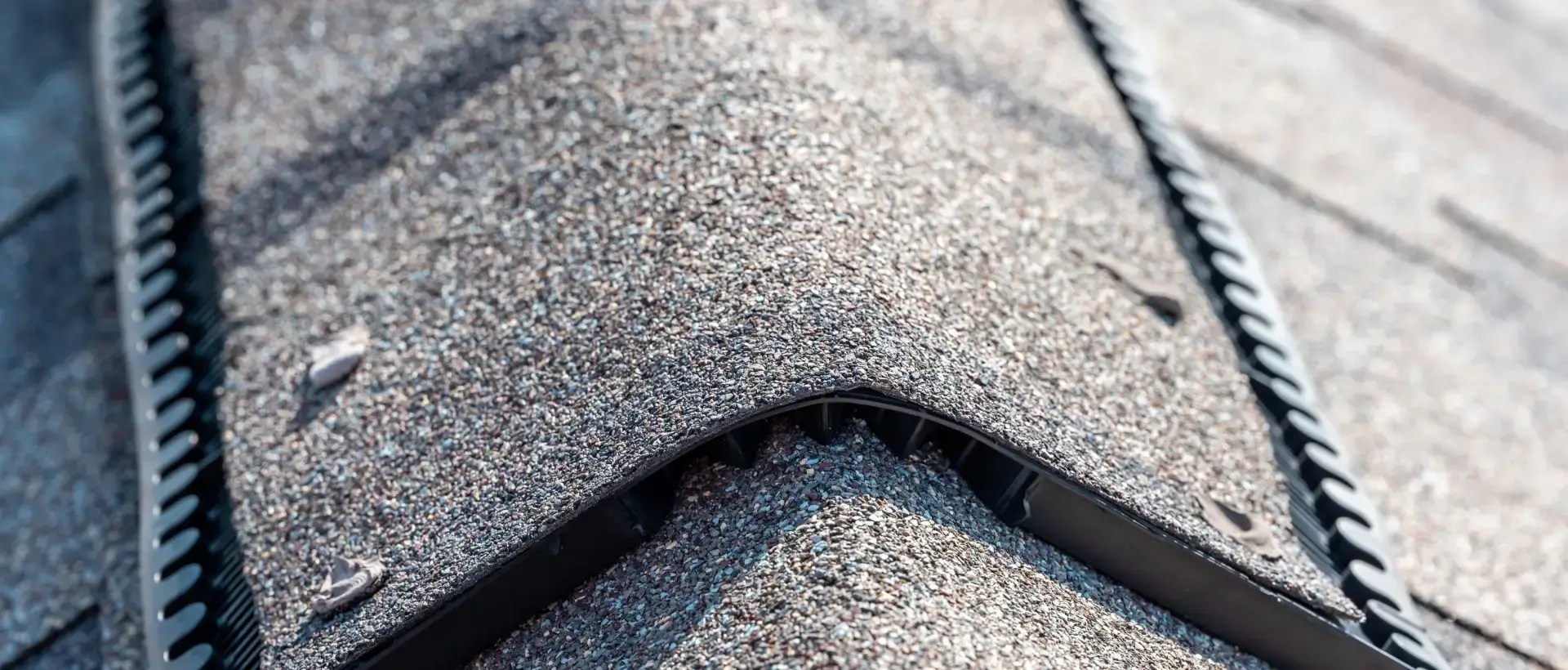
Like any roof vent, a ridge vent works by releasing hot, humid air from your attic. This vent is low-profile, cut into the ridge, or peak, of your roof. By placing the vent at the top of your roof, it naturally catches hot air as it rises and allows it to pass out of your attic.
While a ridge vent leads into your attic, it is specially designed to prevent water, pests, and debris from entering your roofing system. On top of this inherent protection, most ridge vents are shingle-over ridge vents. This means your contractors will also install ridge cap shingles over top of the vent, which provide extra protection.
The biggest advantage to this approach is the sleek aesthetic. Unlike other roof vents, shingle-over ridge vents don’t visibly stick out of your roof. This means there’s no disruption to the look of your shingles, and you don’t have to worry about multiple vents disrupting your new roof’s aesthetic.
Alternatively, you can get exposed ridge vents made of aluminum. These are more durable, but they’re also more expensive and look much more visible on your roof. This is a popular option for homes near Florida’s coast, since aluminum resists rust even in saltwater air.
While ridge vents have a lot to offer, they aren’t for everybody or every home. It’s time to talk about how you can be sure if a new ridge vent is the right fit for your roof!
What Roofs Benefit from Ridge Vents?
There is no shortage of roof ventilation options, and each is right for different kinds of roofs. The important thing is that your roof follows the 1:300 rule. This recommendation from the Federal Housing Administration states that most homes need one square foot of roof ventilation for every 300 square feet of roofing.
If your home has a long ridge line, then a ridge vent should have no problem meeting these criteria. However, each roof is unique, and some may have little or no ridge line to speak of. If this is your situation, you may need additional roof vents installed either in addition to or instead of ridge vents.
For this reason, other types of roof ventilation are popular for homeowners with low-slope or multi-ridge roofs. If you have an especially large roof, you may also need additional ventilation to make sure that your roof meets the 1:300 requirement. When dealing with experienced contractors like PITCH, they should have no problem helping you plan your attic ventilation to ensure that you’re following all relevant standards and guidelines.
With all of this said, there’s only one more thing to consider: how much a ridge vent costs in Florida.
Cost of Roof Ventilation in Florida
One of the many things homeowners love about ridge vents is their low installation costs. While roof ventilation is generally not an expensive part of the roof replacement process, ridge vents are particularly affordable. So how much do they cost?
It’s impossible to give you a reliable cost for your new vents without looking at your roof. That said, we can tell you that ridge vents usually cost $300 to $600 in Florida. The specifics of how much you pay for your vents will come down to the size and slope of your roof, your chosen roofing materials, and which contractors you pick.
Finding the right roofers is the best way to ensure you get a reliable roof at a low, fair price. That process starts with collecting estimates. If you’re planning on getting new ridge vents or an entirely new roof, PITCH Roofing is here to help!
Get Your Free Roofing Quote
Attic ventilation is an essential part of any roofing system. And ridge vents are a particularly popular option in the Florida market. Whether you’re considering getting new vents on their own or as part of a roof replacement, the process starts with you getting your free, no-obligation roofing estimate.
For your free roof quote, call us at 727-677-4824 or fill out our contact form. We’ll inspect and measure your roof and review all of your roof ventilation options so you’re getting a solution that’s tailored to your home, your preferences, and your budget.
At PITCH Roofing, we don’t focus on upselling or pressuring our customers. We live by a code of Roofing Done Right, ensuring that we prioritize customer service and quality workmanship above all else. Reach out for your free roofing quote to see what the PITCH crew can do for you!
Ridge Vent FAQs
Q: Which roofs should get ridge vents?
A: Ridge vents are well-suited to homes with long ridge lines and a normal slope. If you have a flat roof or multiple, short ridge lines, then you may be better served by other types of ventilation.
Q: What are the downsides of ridge vents?
A: While their mesh paneling helps keep water and pests out of your roof, these vents are not 100% impervious. During heavy storms and hurricanes, you might experience some minor leaking.
Q: Are ridge vents expensive?
A: No, ridge vents are one of the more affordable attic ventilation options, in fact. While they are not the cheapest option on the market, ridge vents deliver great quality for a very low cost.
Q: How long do ridge vents last?
A: Ridge vents last for 20 to 30 years on average. In the vast majority of cases, you can count on your vents lasting as long as your shingle roofing system!

Heather Ware is an In-House Roofing Specialist at PITCH Roofing. Working daily alongside our internal roofing teams, she translates complex Florida building codes and roofing techniques into clear, actionable advice for homeowners. With 4 years of experience in the Florida roofing industry, her goal is to ensure property owners have the exact facts they need to protect their investments.

